 How can I help you? How can I help you?
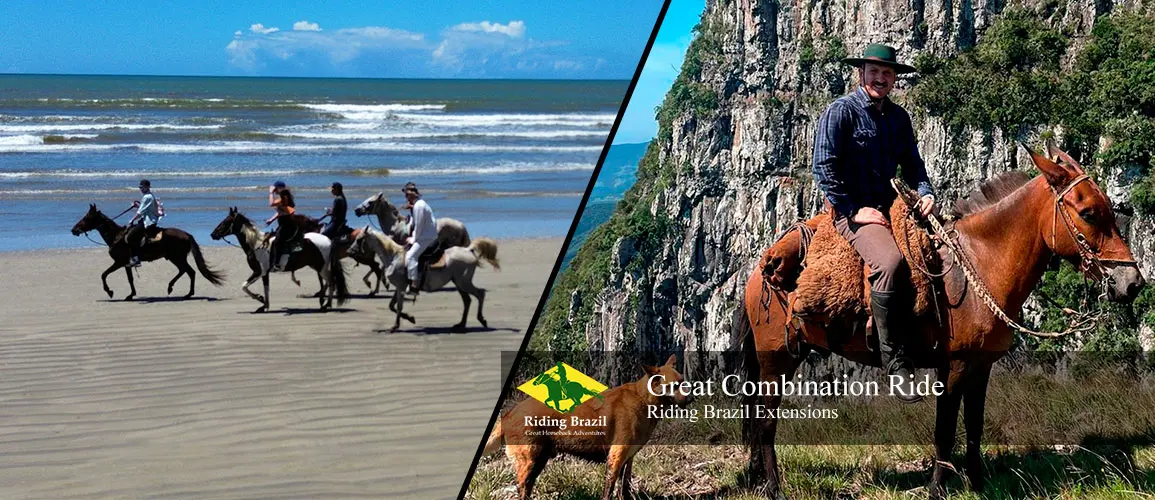
Experience the true Brazilian backcountry with all its rich traditions and hospitality. We offer superb riding, at all paces, at 3,000 to 5,500 ft elevations, surrounded by outstanding, ever-changing scenery. Our horses accommodate all levels of riding ability and experience—from obedient, calm, and patient to very forward-going and fast when demanded. Less experienced riders can count on gentle and sure-footed animals.
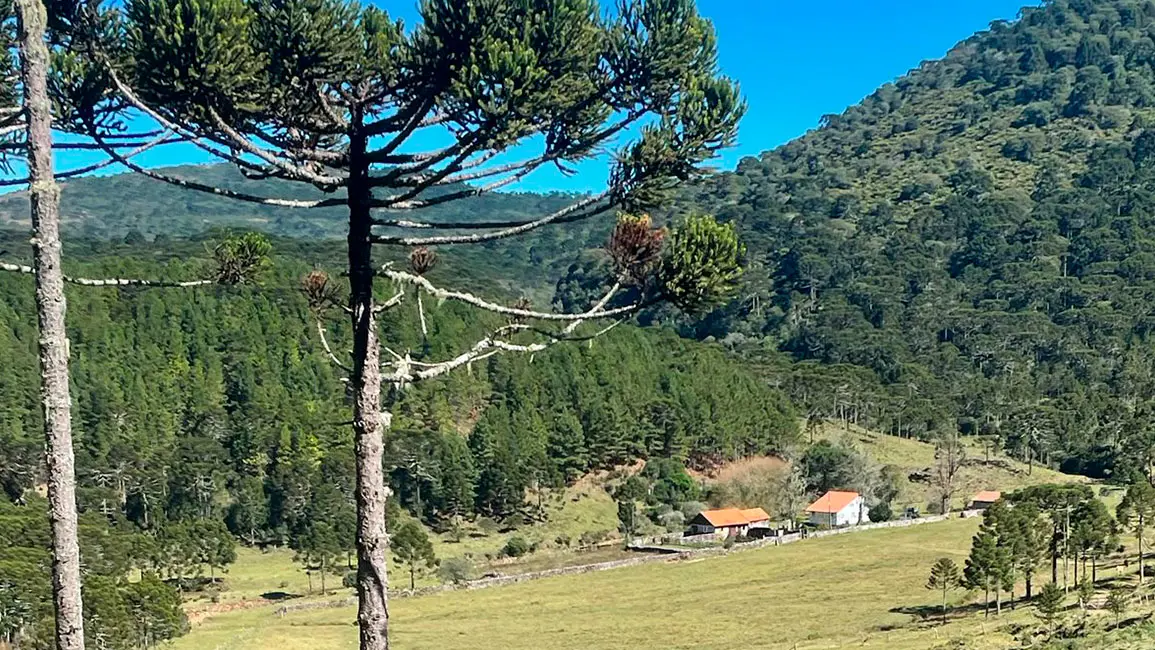
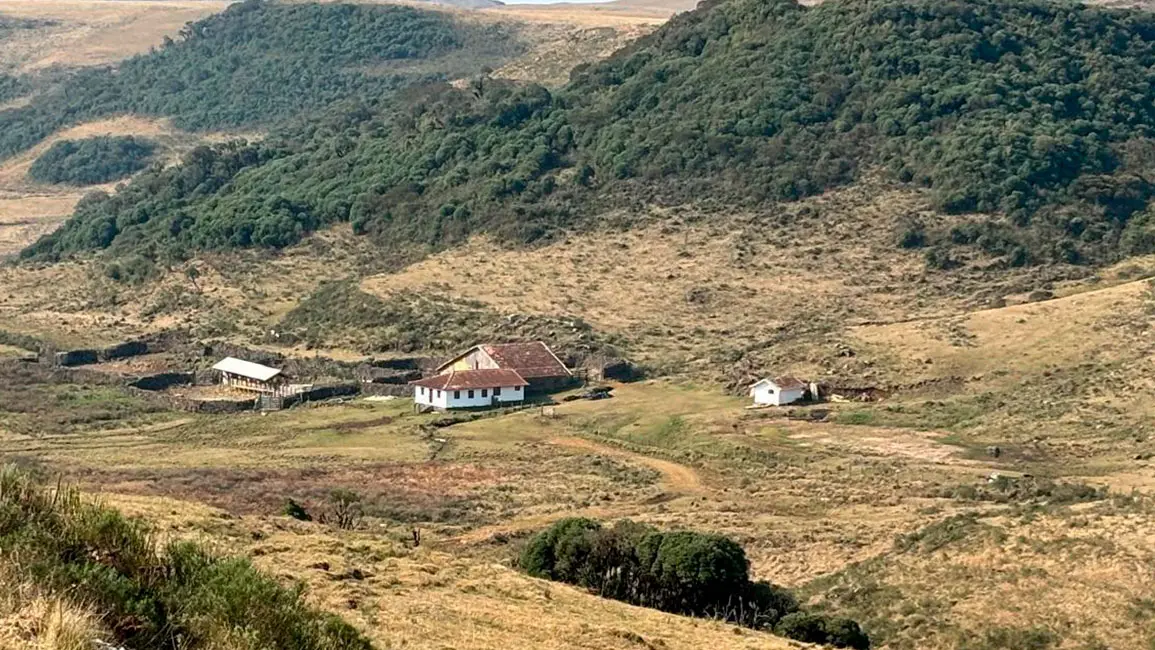
The impressive mountain panorama of the Southern Brazilian High Sierra, with one National and two State Parks, offers a variety of superb natural attractions. Wide open and hilly grassland, bushland, lush patches of magnificent South American Araucária pine forest, a great number of clear rivers, rapids, and waterfalls change to breathtaking canyons interspersed with lovely green valleys of the Serra Geral mountain range.
Animal and plant life of this part of the tropical highlands is well preserved, in particular birds like the blue-crowned trogon, siriemas, buff-necked ibis, Southern lapwings, quails, a great diversity of hawks, falcons, eagles, saffron finches, shiny cowbirds, owls, and many others. The area is also habitat of the Puma, and you may be lucky to discover its trail, while he is far ahead or... behind you. Other animals of the region are the ocelot, pampas deer, armadillo, coati, otter, and capybara.
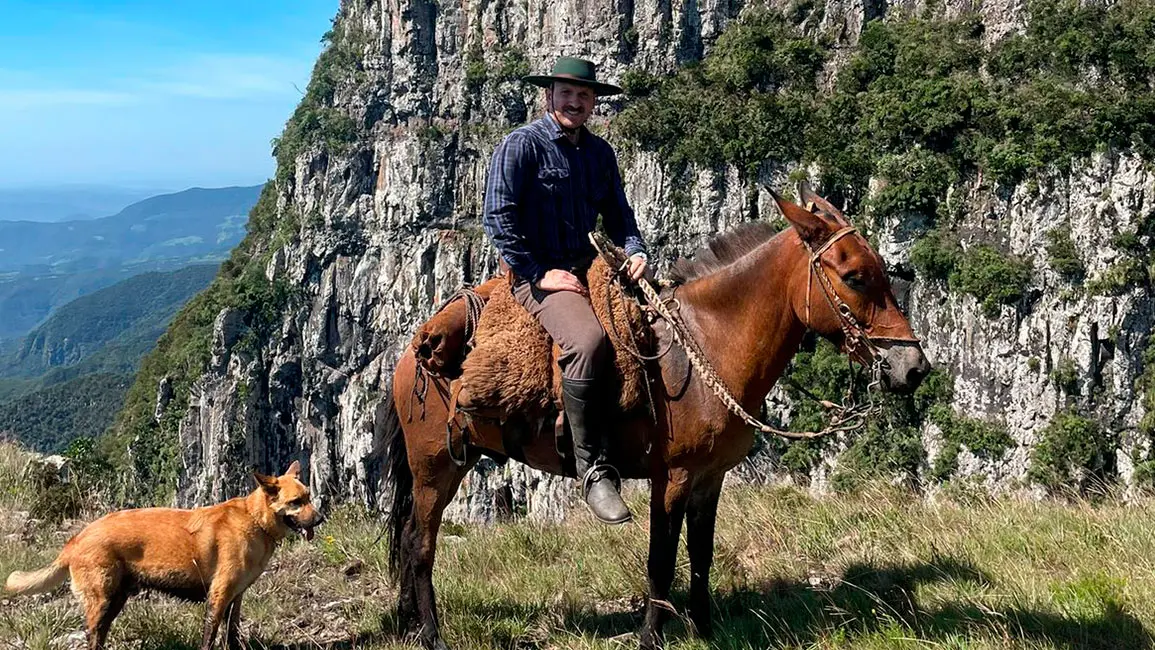
The region is sparsely populated by small dairy farms and cattle ranches that seem almost lost in the vastness of the land. This is the home of the mountain gaúchos and horsemen. They have preserved their traditions through the generations and proudly show them off. On weekends, folk gather in the rustic galpões, the barn and animal shelters of the farmhouse, and dance and sing while a lavish churrasco BBQ is prepared on an open fire. Beautiful horses and superb horsemanship are on display at the frequent rodeos, where, dressed in their traditional outfits, people dance to the chamamê, xote, or vanerão, to the sound of live Brazilian country music. Whenever this can be fit in with our program, our guests are invited to visit these traditional events and enjoy great hospitality.
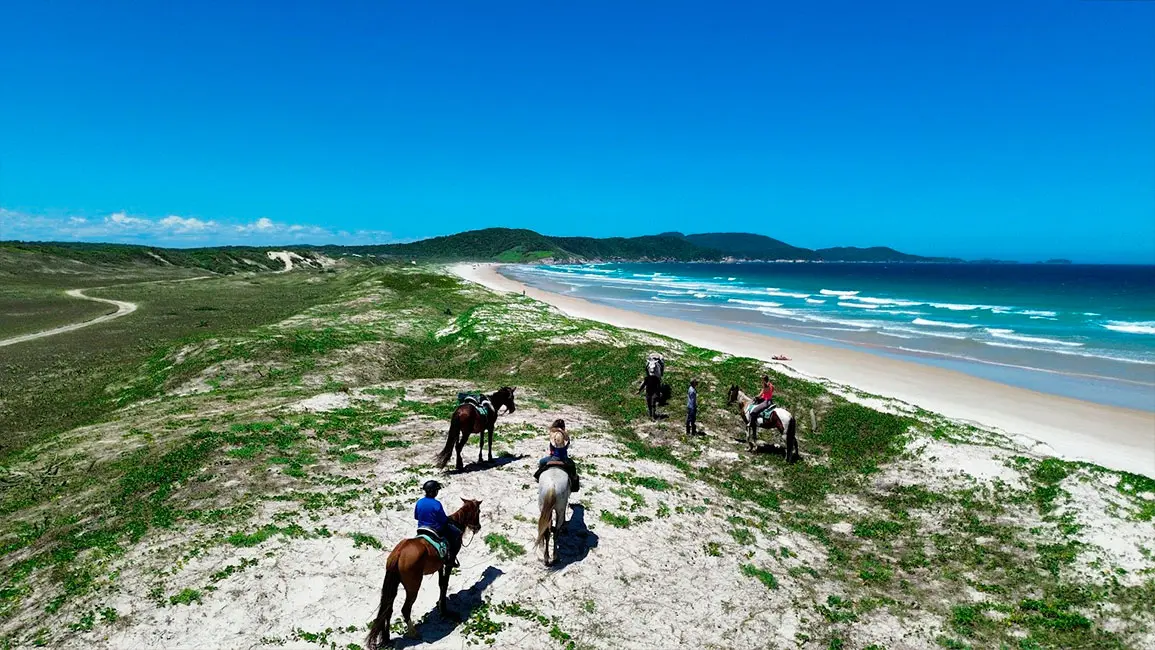
The second part of this combination ride offers a perfect contrast to our stay in this magnificent mountain landscape, with daily rides across the pristine white beaches and dunes of the Rio de Janeiro coast. The stunning turquoise color of the sea is particularly noteworthy, which is why this stretch of coast is known as the "Caribbean of Brazil".
The “Região dos Lagos” is one of Brazil's most exciting places. A two-hour drive on highway RJ-124 gets you to the scenic Araruama lagoon. The lagoon extends alongside the ocean for over 160 km to the east and further to Cabo Frio, with its historic downtown and its Venice-like lagoons and channels, to the former fishermen village of Arraial do Cabo with some of the best beaches in Brazil. During July–September visitors can watch here the spectacle of Southern Right and Humpback Whales on their way from/to the Antarctic to raise and protect their offspring in calm waters. Not to forget Búzios, once a romantic village by the sea, today an international resort where luxurious villas and top-of-the-notch Pousadas, restaurants, and bars catch the eye and the purse of the visitor.
Our riding facilities are located near Búzios. Accommodations are in Arraial do Cabo, thus offering additional fun enjoying some of the most beautiful beaches in Brazil. Upon request, accommodations in both Búzios or Cabo Frio can be arranged.
The great variety of attractions and highlights described here, combined with the freedom to ride to one's heart's content, best define this unique combination ride.
Joint transfer from Florianópolis to Urubici (3.5 to 4 hours) and proceed to Estância Vô Ana (45 minutes) for check-in.
Afternoon checking horses on a ride around the property. Dinner and overnight at Estância Vô Ana.
9:00 am
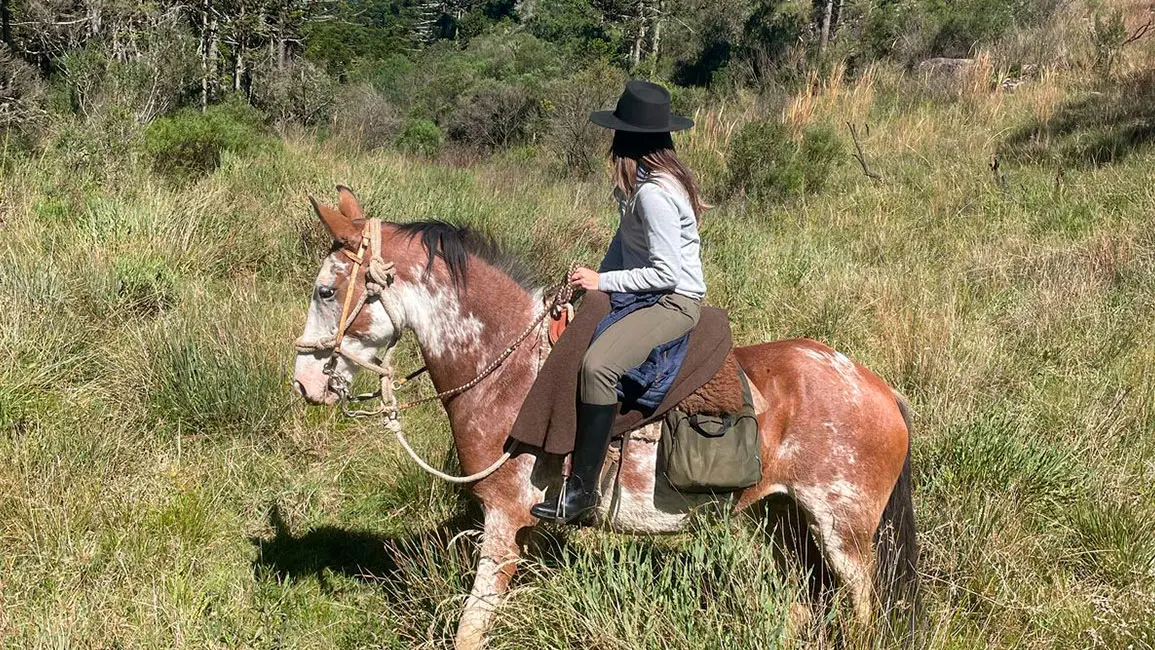
Getting on horses for the ride to Fazenda Segualquia. The approximate 5-hour ride takes us through lush Araucária Paraná pine forest to the breathtaking Santa Bárbara high fields. Here we may see the Seriema bird (Cariama cristata), but hopefully not hear its trumpeted cry, as that advises of bad weather ahead. They are also otherwise useful animals, since their preferred diet is snakes! The Quero-Quero (Vanellus chilensis) will watch us all the way and scare us off from their hidden earth nests, raising hell if we get too close. Another typical southern Brazilian bird is the Gralha Azul or Azure Jay (Cyanocorax caeruleus), which plays a significant role in preventing the Paraná pine (Araucaria angustifolia) from extinction. More difficult to spot is the highly vulnerable Red-spectacled Amazon parrot (Amazona pretrei).
We should arrive at Segualquia around 4:00 pm and will be received with a good drink for relaxation. Dinner is cooked by the guide himself, with pictures of his capabilities as chef of the wilderness available. Riding pace today varies; canters and gallops are always possible. Overnight at Fazenda Segualquia.
8:30 am
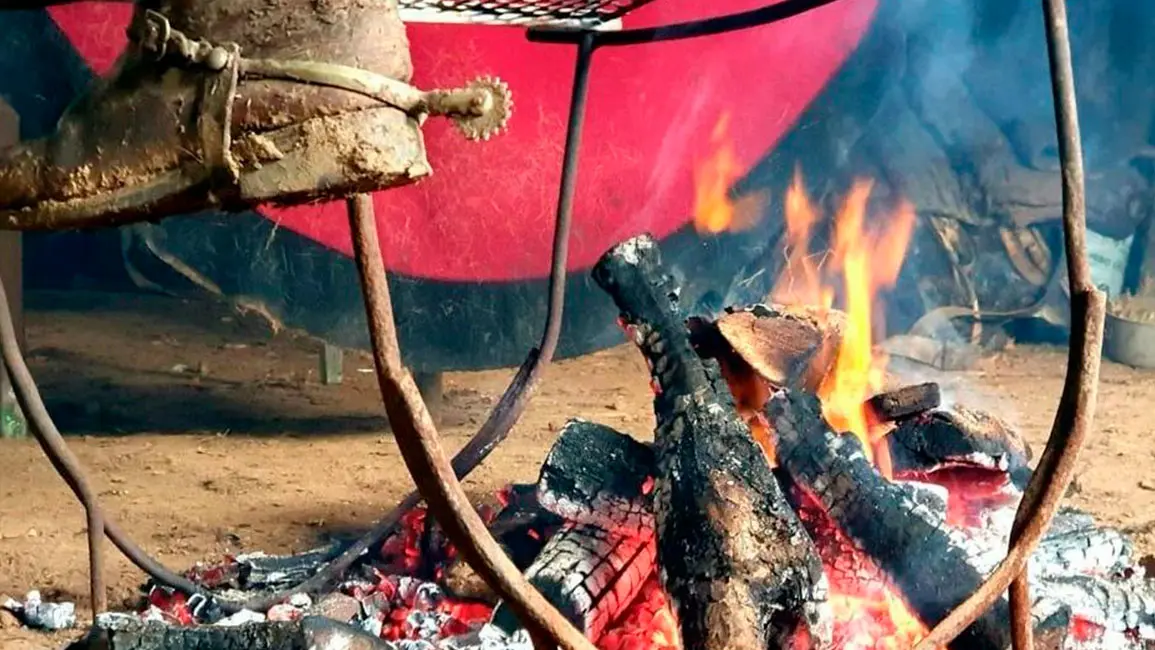
Our destination today is the Laranjeiras Canyons, which are part of the Campos dos Padres High Plateau, said to be an ancient Jesuit hideout. This is another ride totaling approximately 5 hours in the saddle (2 hours in the morning and 3 hours in the afternoon). On the way to the Laranjeiras Canyons, you will experience a scenery of pure nature—mostly typical subtropical mountain vegetation consisting of grass pastures interrupted by patches of forest and rocky terrain. At a creek, we break for lunch. It will be an authentic churrasco, a Brazilian BBQ lunch out of the saddlebag with coffee from the Polaca, our most exotic coffee pot. After the feast, shadowy Araucárias invite you for a nap.
As the region is sparsely populated, we will not see signs of tourists or other folk around. Riding along the edges of the canyon, you will appreciate spectacular 360° views. On very clear days, you may even be able to see the coastline of Florianópolis. At Fazenda Laranjeiras, a high-altitude cattle ranch, we stay for dinner and overnight.
8:30 am
Today we leave Fazenda Laranjeiras for another mountain ranch, Fazenda São João do Rio Pelotas.
Ever-changing terrain requires uphill and downhill riding. On the way, riders may encounter a person or two collecting Yerba Mate leaves (Ilex paraguariensis), a bush that grows here naturally between Araucária pines and other forest vegetation. According to legend, Jesuit missionaries left the region between Paraguay, Argentina, and Brazil when the order was abolished in 1773, seeking safety and new activities in the highlands of Santa Catarina, thus introducing Ilex paraguariensis to the region. The approximately 6-hour high-altitude ride (at an average of 1,200–1,600 m) comprehends, among great natural sights and patches of Araucária pine forest, an extended ride through the Pelotas River. Furthermore, we need to tackle some swampy ground, which is no problem for tough and sure-footed mounts. After arrival at the Fazenda, riders are offered an invigorating chimarrão (Yerba Mate tea). After hot showers, riders are best prepared to enjoy a home-cooked dinner of gigantic size and flavor. Later on, when the flames blaze in the fireplace, our host will tell us how he frequently loses newborn calves and pigs to the Puma. As usually one story leads to another, intercultural encounters, knowledge, and understanding spread among the group—which is one of the declared aims of our rides. Overnight at Fazenda São João do Rio Pelotas.
8:30 am
This will be an uphill and downhill ride with altitudes varying between 1,200 and 1,600 m. The scenery changes from high fields with grazing cattle to mighty Araucária pines and Atlantic Rainforest. The Dicksonia giant ferns (here called Xaxim) grow up to 10 meters high. Their trunks used to be cut into smaller pieces to serve as flower pots, as they retain water for a long time. Once at the brink of extinction, their population has recovered due to strict environmental protection. An intriguing sight is the "Casa de Pedra" (Stone House), said to date back to the 17th century, having served as a hideout for bandits, revolutionary headquarters, home to rich farmers, a hidden love nest, and so forth.
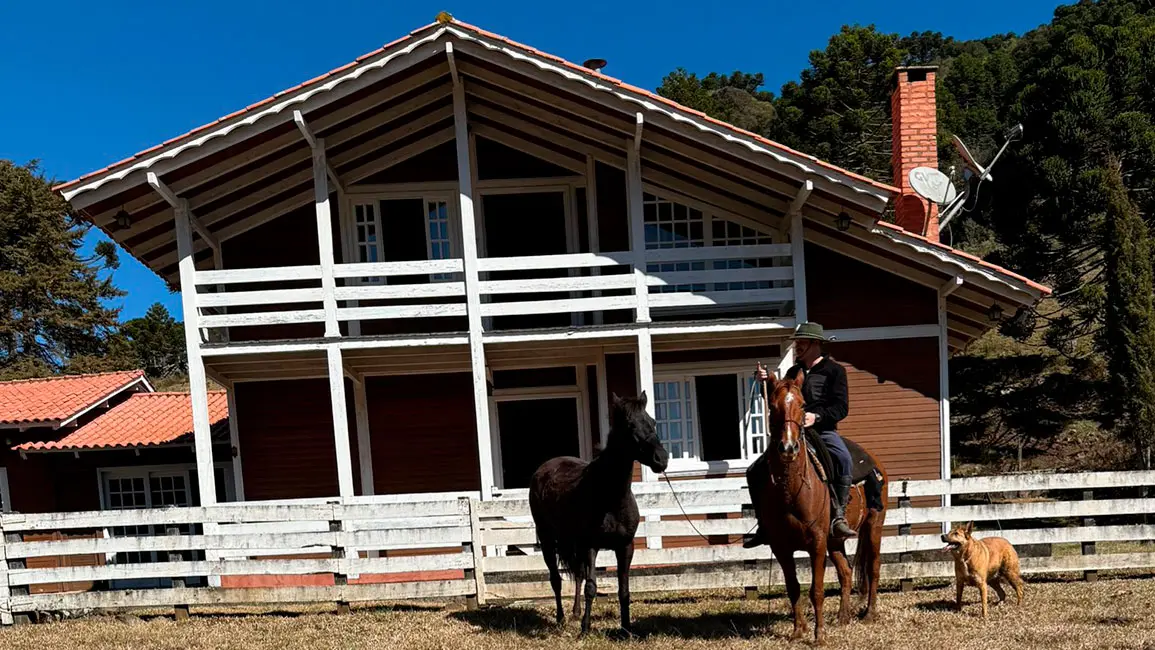
Arrival at Fazenda Coxilha de Verão is estimated between 3:00 pm and 4:00 pm. The place is a rustic mountain lodge and Fazenda with no electricity. A hot shower, however, is available, and food is cooked over an open fireplace. Overnight.
8:30 am
This last full-day ride offers the whole range of natural highlights of the region as it takes us through a variety of changing scenery: high-altitude grazing fields, crystal-clear rapids, rivers rushing down into valleys, Atlantic Rainforest, and even an old, weathered graveyard of dubious origin. As the story goes, a whole family who died tragically after getting lost on the snow-covered high plains are buried here.
The diverse landscapes will accompany us during the whole ride and will give the group plenty of opportunities to change the pace according to the terrain. Your guide will advise you on the recommended pace for different types of terrain. Today's ride may take a bit longer as we have to make it back to our starting point, Estância Vô Ana, where we are estimated to arrive around 5:00 pm. For this last evening, we have arranged a special farewell dinner. Overnight at Estância Vô Ana.
At a convenient time, we transfer you to Florianópolis airport for your flight to Rio de Janeiro. Our driver will be waiting at Rio de Janeiro airport to take you on a 3-hour drive to your hotel in Arraial do Cabo. Overnight.
Our riding package offers two rides on Days 8 and 9 of approximately 4 hours each, plus a full-day ride on Day 10. The rides cover the following beaches, lagoons, and panoramic highlights in:
Pick-up from the hotel is usually at 9:00 am, returning around 2:00 pm, but schedule times may suffer ad-hoc changes according to weather and local conditions.
Transfer from the hotel in Arraial do Cabo at 8:00 am to start riding at 9:00 am. Leaving our riding facilities for Praia Rasa beach and heading northeast on horses at a smooth pace toward the Barra de São João River. Deserted beaches and isolated small fishermen communities are part of the colorful scenery as the environment further ahead changes to restinga, palm forest, and dunes. Restinga is a stretch of diversified vegetation adapted to the salty coastal climate. At some points we cross small creeks, constantly accompanied by marine birds like seagulls, frigatebirds, large-billed terns, cormorants, and others.
Riding over flooded plains amidst well-preserved native vegetation, wild animals such as marmosets, egrets, and even giant anteaters can occasionally be seen. It is the ideal place to relax and refresh both riders and horses.
We continue on endless white beaches and dunes that invite great canters and gallops.
Where the mouth of the São João River meets the sea, it is normally not possible to cross except at very low tide. We therefore bypass the river on a paved road to reach the other side. The scenery requires a stop to contemplate the silence of surrounding nature, the compelling river with its mangrove forest rich in biodiversity, sandbanks, and views of the ocean.
The group then arrives at Barra de São João, a river inlet and small town with charming colonial housing. Horses are safely tied in the shade while the group stretches their legs strolling along a seaside esplanade to a nearby restaurant for lunch. The restaurant is noted for its homemade seafood platters, enjoyed with a romantic view over the river.
The ride, the sun, and the good food call for a well-earned siesta before returning to our base by car, where the group is estimated to arrive around 4:00 pm.
Note: This full-day ride is operated only during the off-season on weekdays from March to November. From December to February, a half-day beach ride in either Búzios or Arraial do Cabo plus a city tour of Cabo Frio is scheduled for the day.
End of our services!
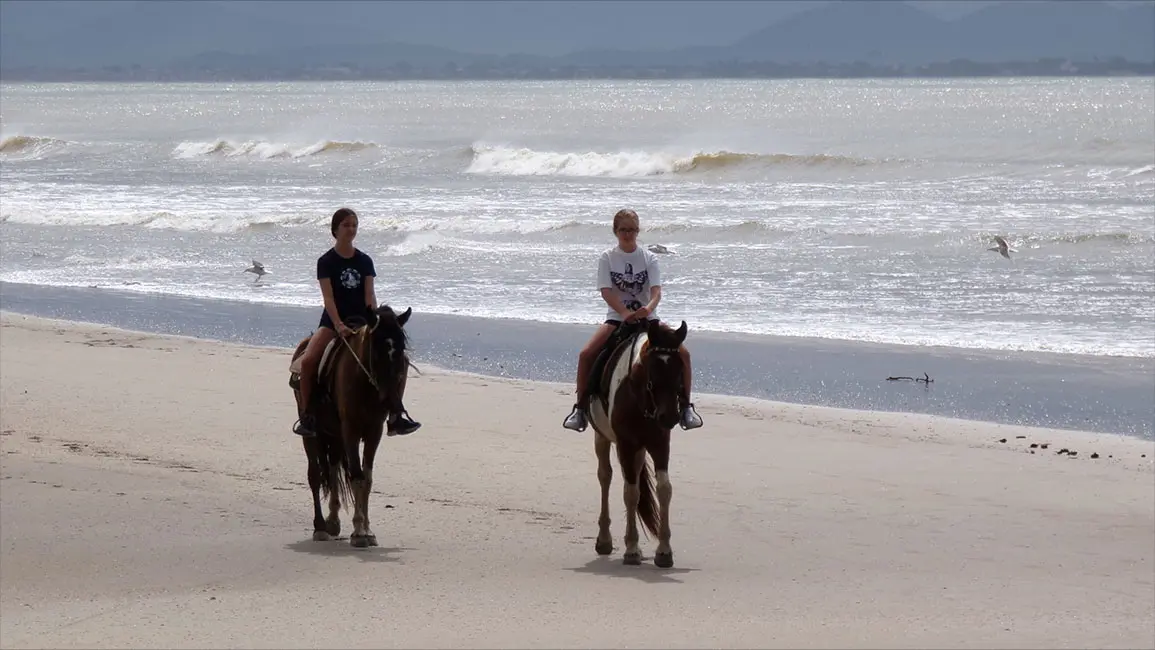
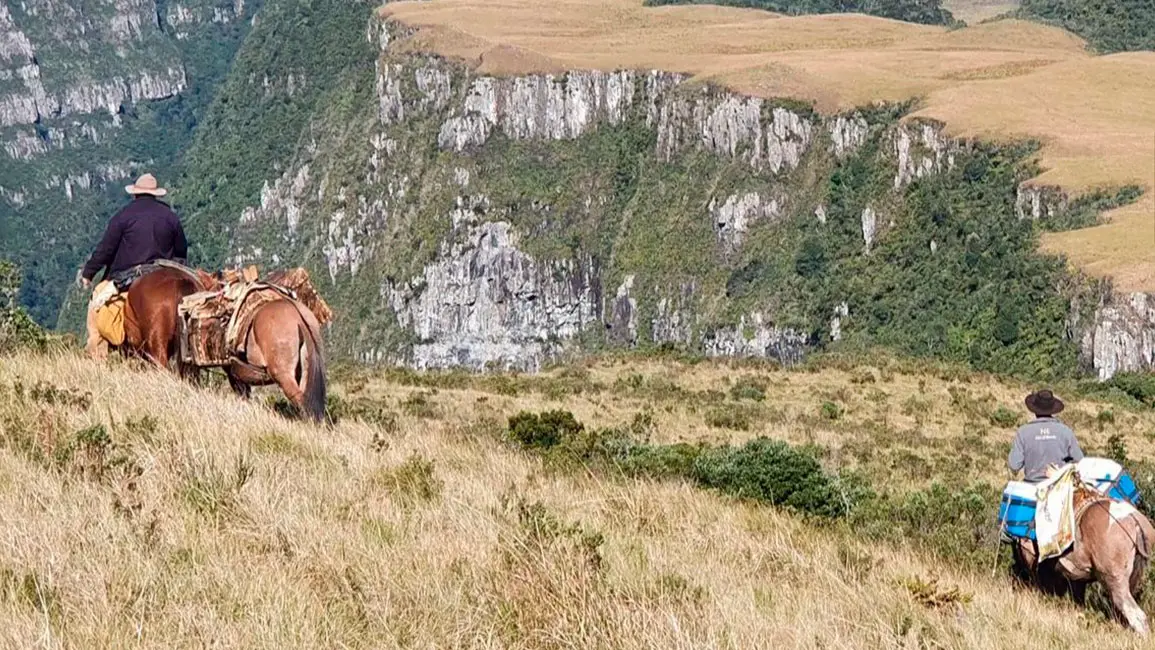
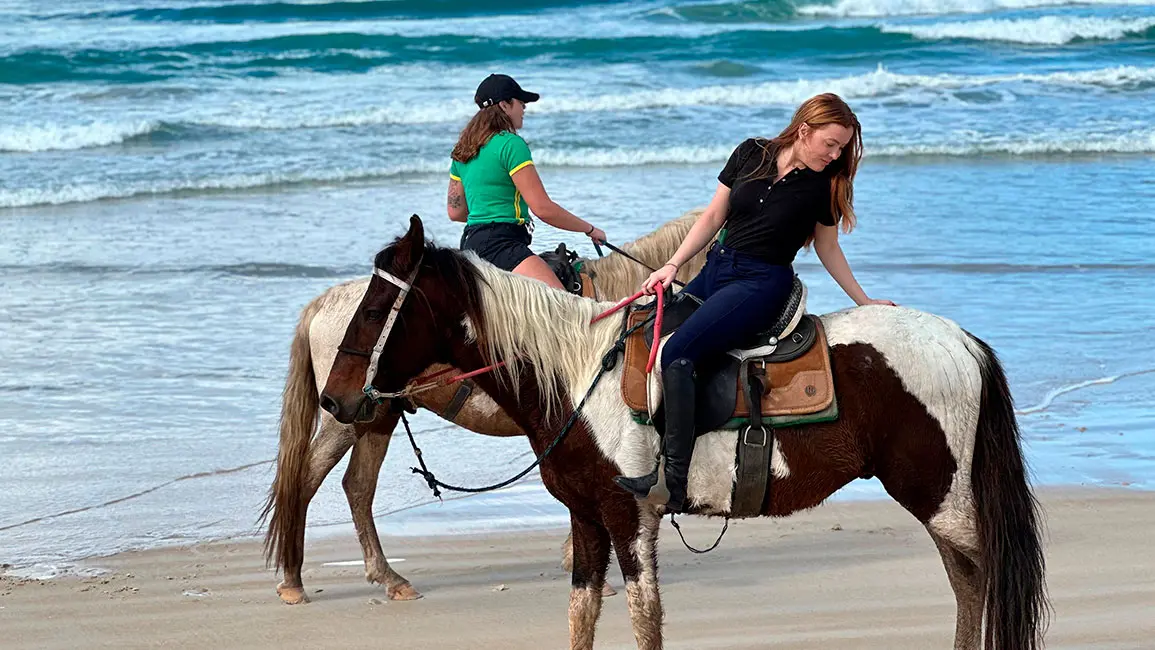
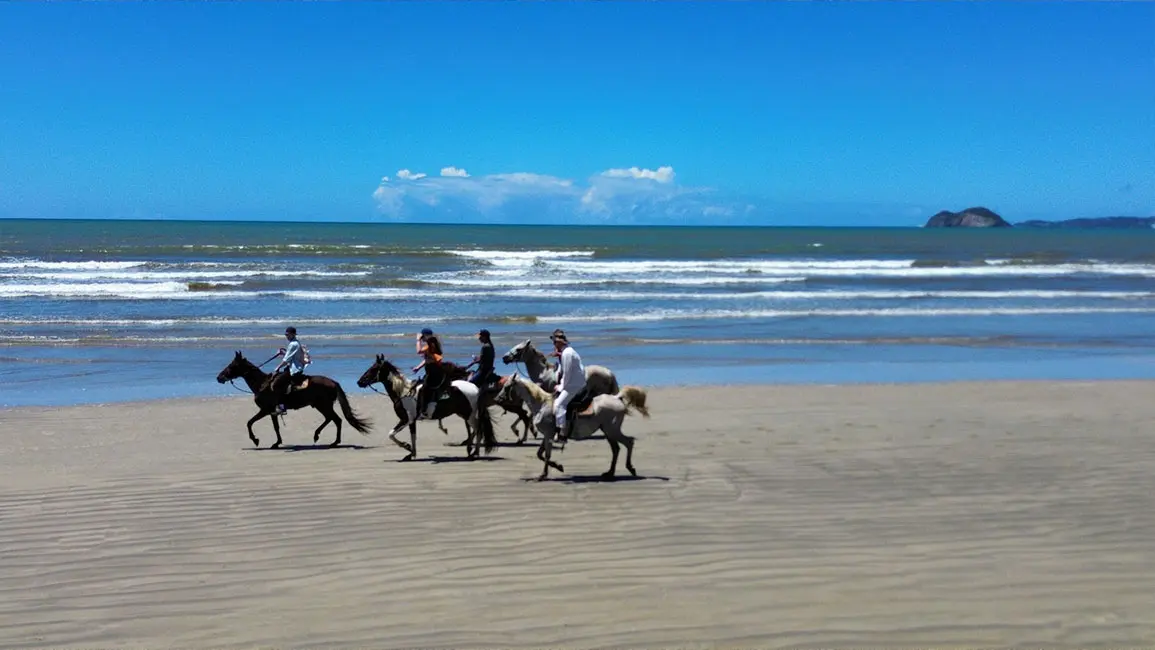
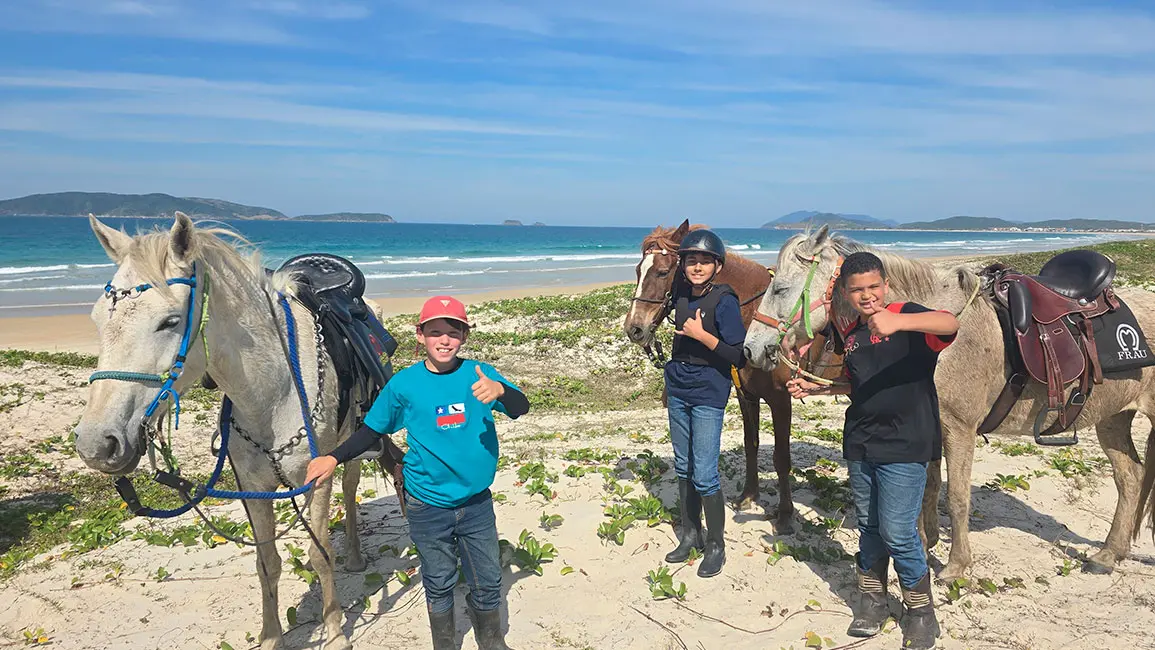
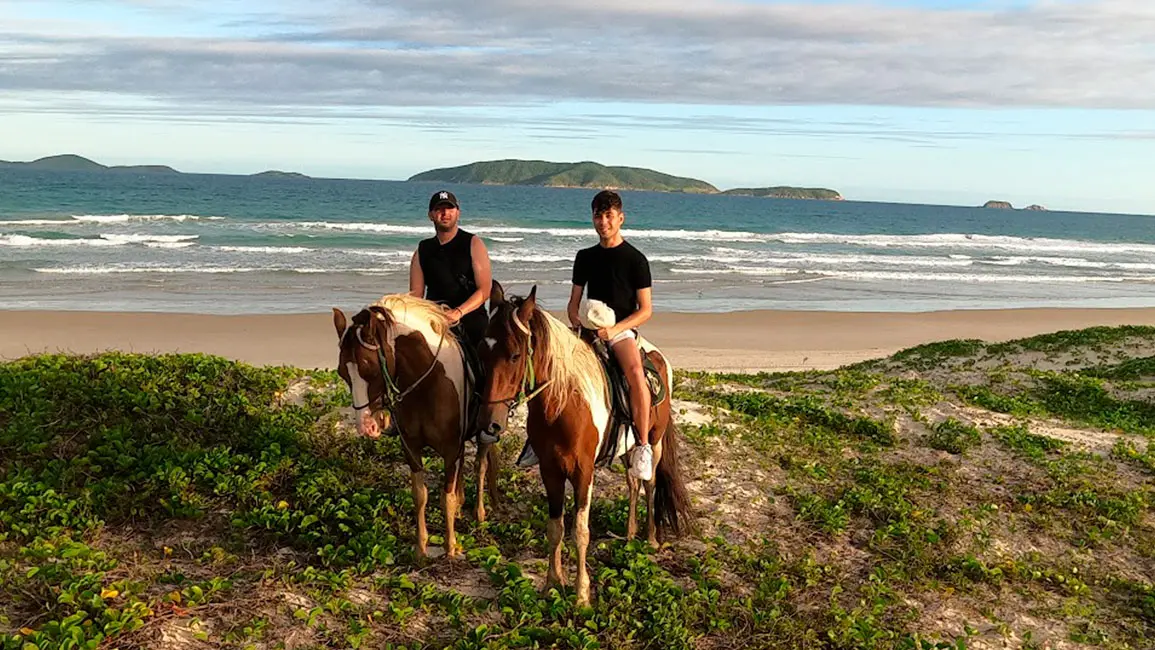
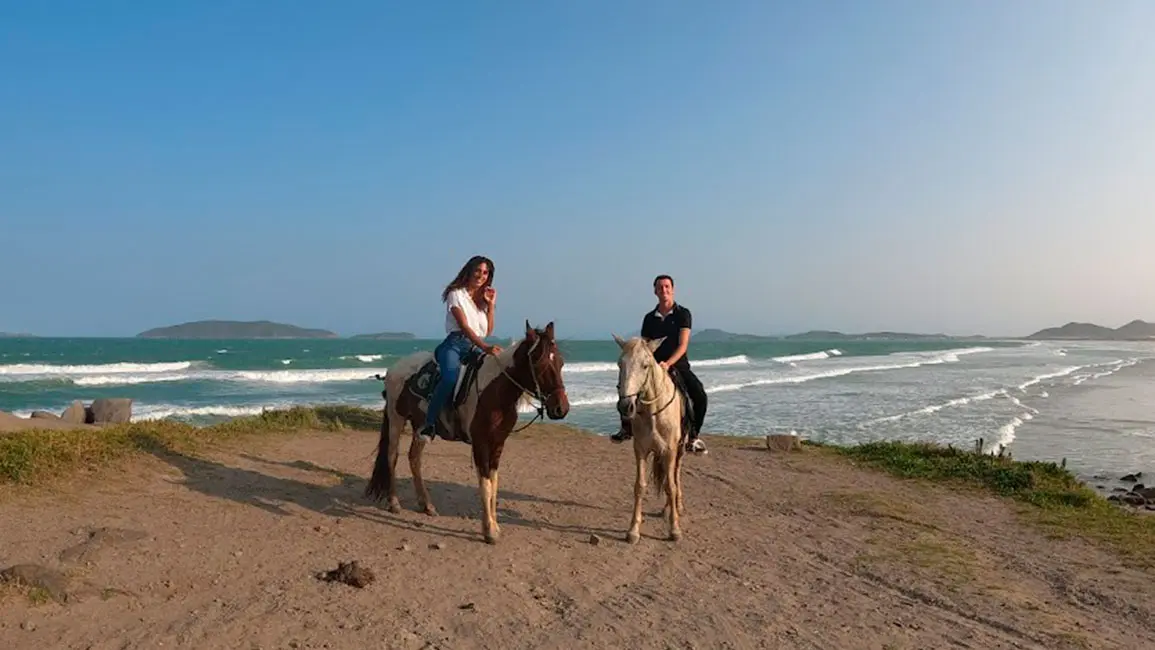
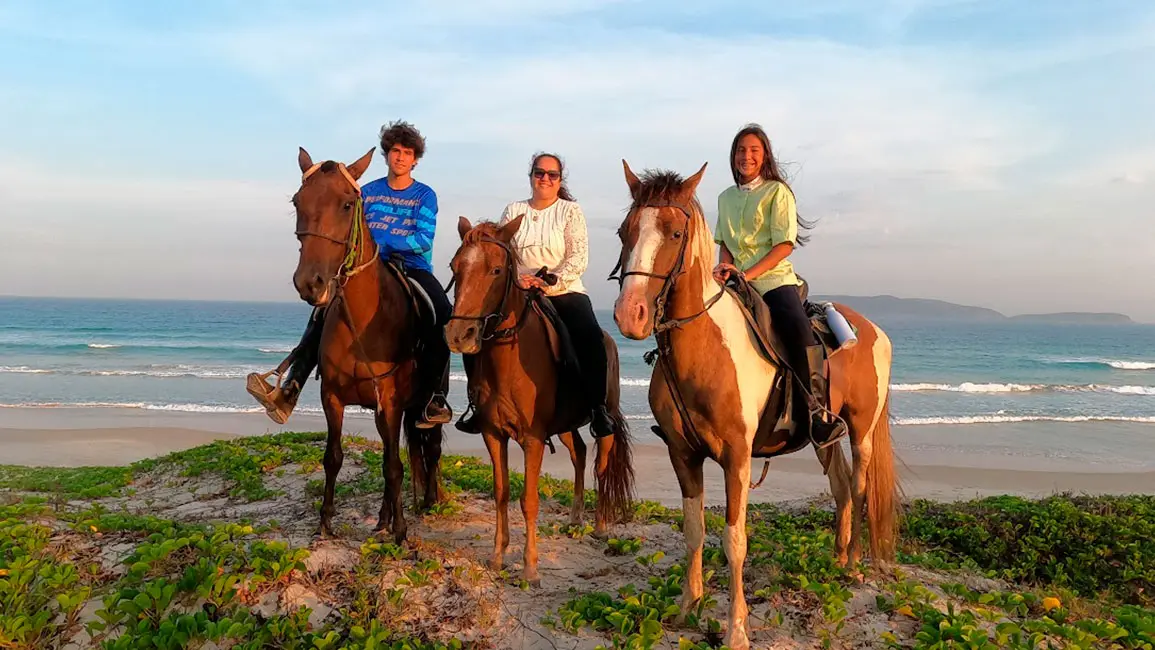
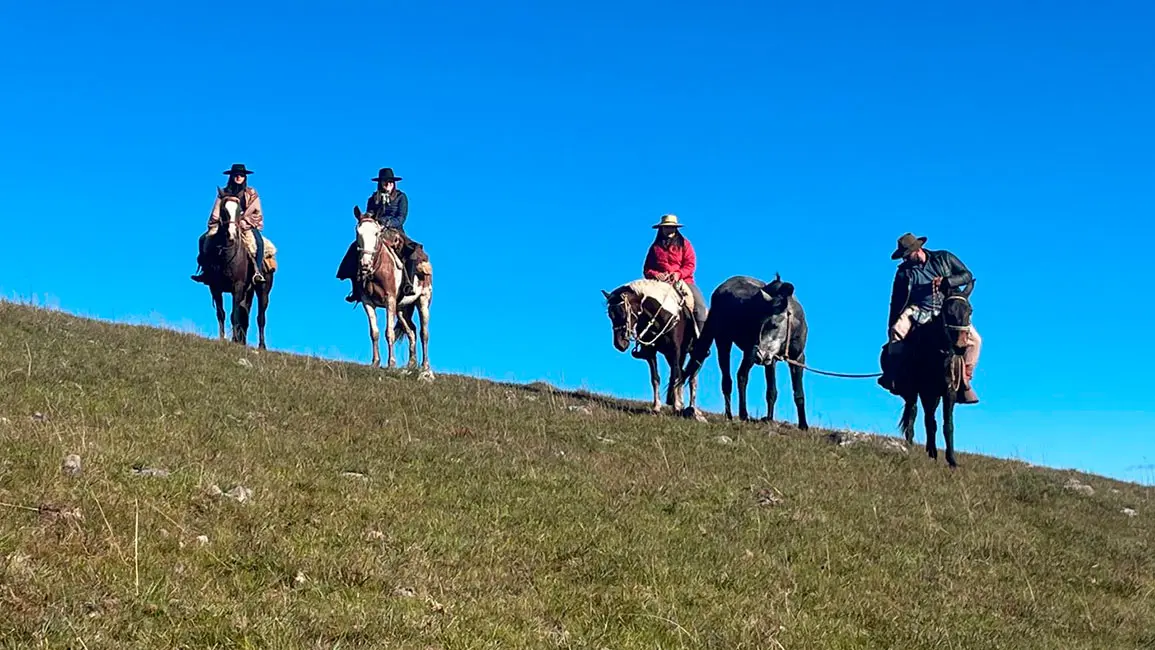
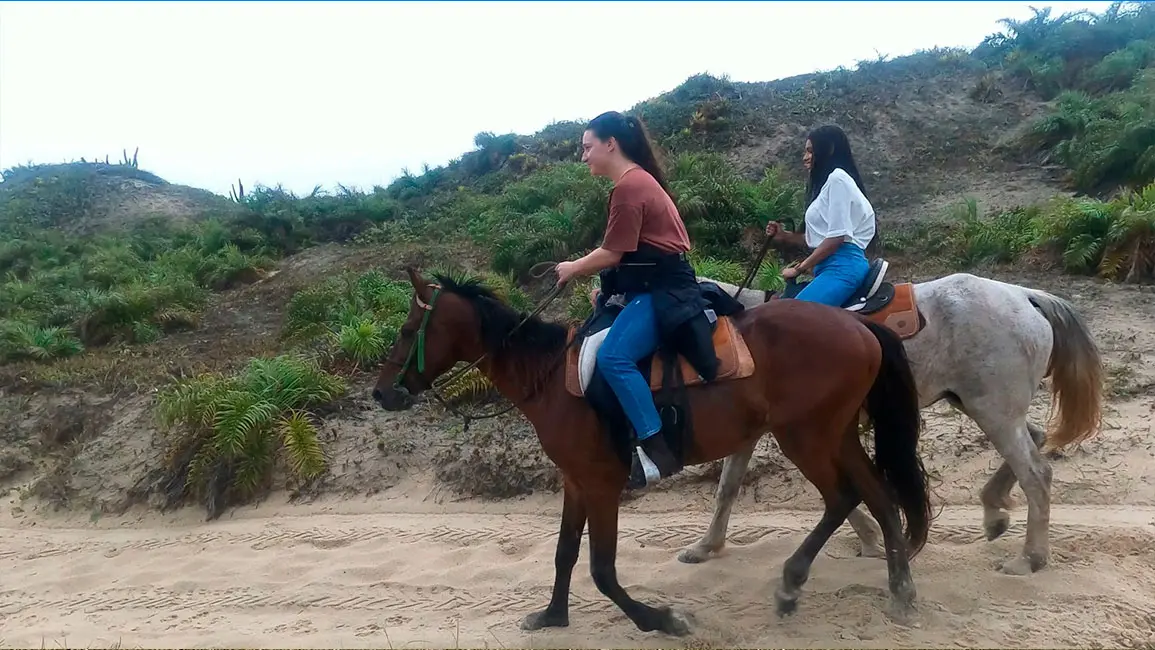
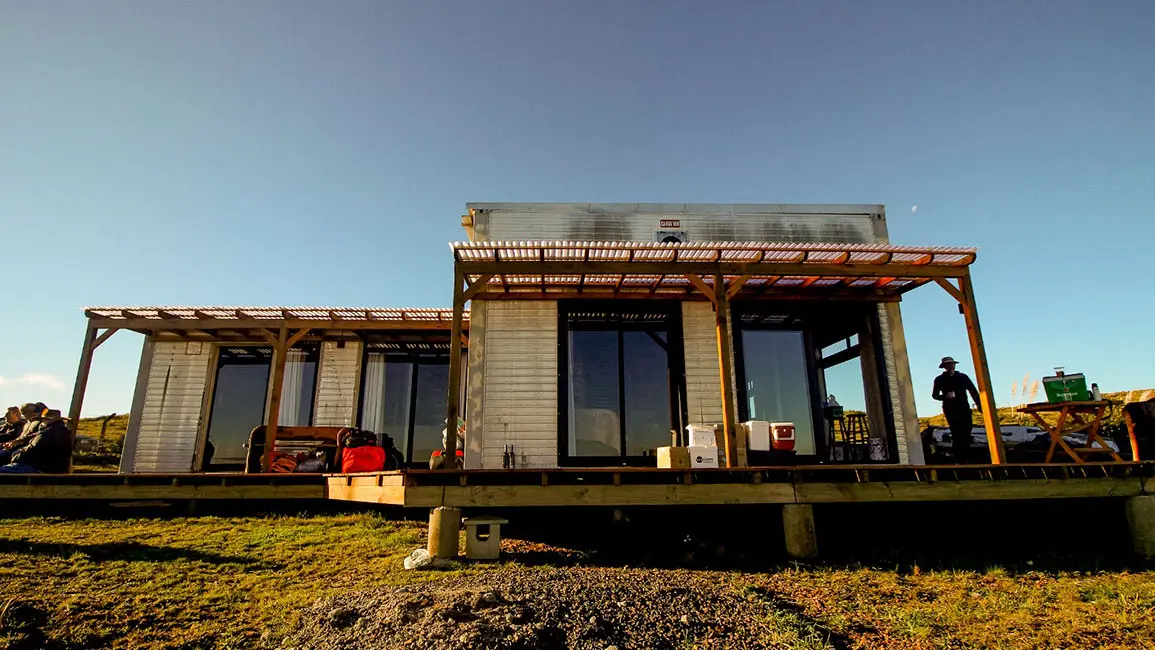
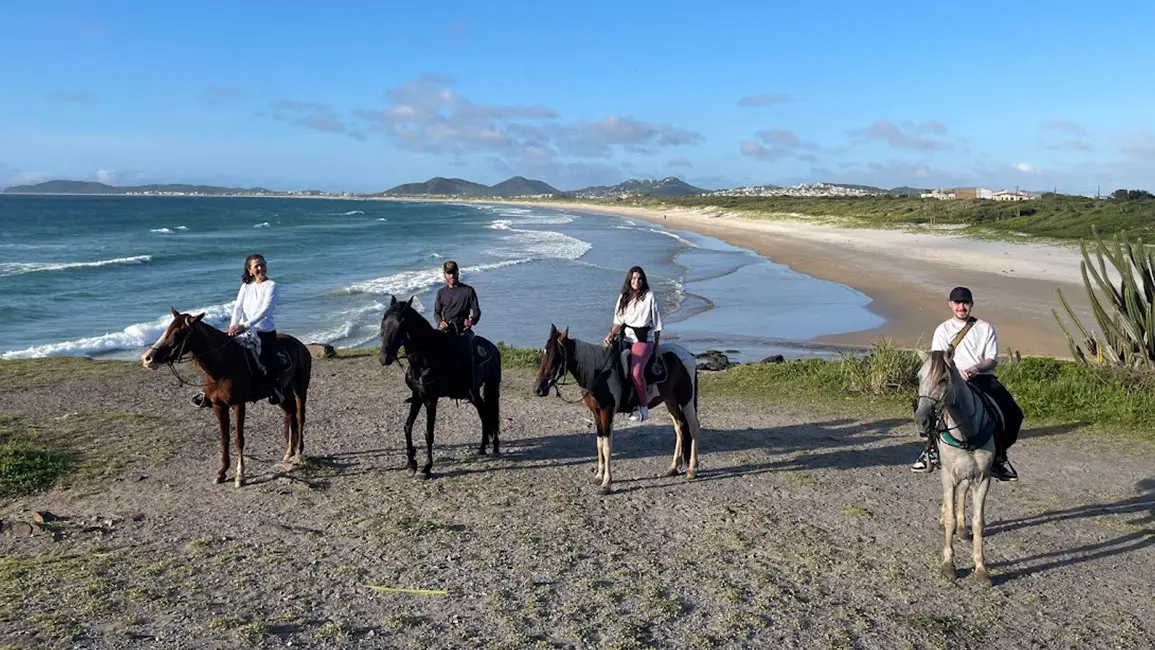
The Brazilian Mangalarga Marchador horse was bred in 1822 as a cross between a Royal Alter Stallion and selected mares from Minas Gerais to produce a horse with a fast but smooth pace. Initially, they became known as sublime horses. Nowadays, they are considered the National Horse of Brazil, as well as being one of the most popular and ubiquitous breeds in South America.
Intelligent, regal, alert, and of incredible endurance, they are renowned for their marchas, or gaits. The marcha picada is a lateral and very smooth movement, while the marcha batida is a diagonal four-beat gait that appears to the naked eye to be a trot, yet has very little vertical movement and so is extremely smooth.
Mangalarga horses are amazingly clever, patient, and friendly. They are perfect for novice and advanced riders alike who wish to ride along the endless beaches of Rio de Janeiro's beautiful eastern shores.
You are invited to enjoy a beautiful region on a sweet-tempered four-legged companion.

| USD (American Dollars) |
| 2 Riders | 5,315.00 USD p.person |
| 3 to 4 Riders | 4,745.00 USD p.person |
| 2026 |
| January 16 | to | January 26 |
| February 5 | to | February 15 |
| March 3 | to | March 13 |
| March 17 | to | March 27 |
| November 27 | to | December 7 |
| 2027 |
| November 28 | to | December 8 |
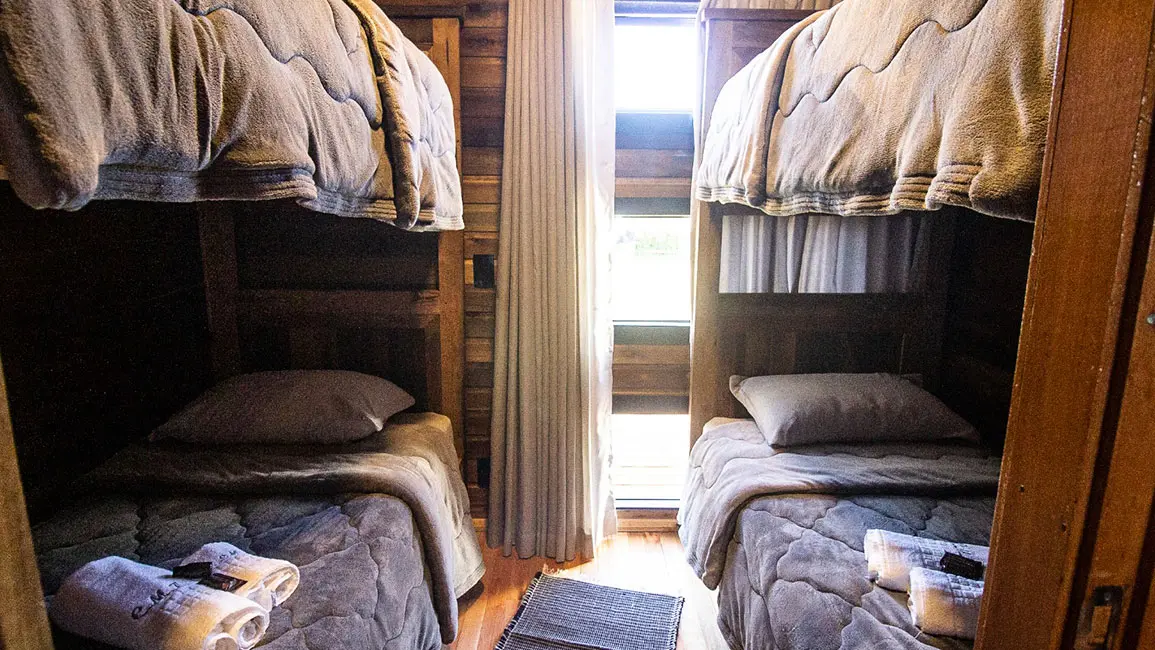
Accommodations at São Joaquim National Park and canyons are generally in double or single rooms at Fazendas, Portuguese for working farms or ranches, and cabins. They are simple but are always clean and cosy. Hot showers, either en-suite or shared, are always available. At the Beach Rides the hotels offer all necessary comfort.
Food consists of a great variety of regional delicacies - and comes in gigantic portions! We also cater for vegetarians on demand. All meals are highlighted by local cuisine, some of the most delicious meat you have ever tasted, home-made breads, beignets and rolls, exotic fruits and vegetables, home-made cheeses, compotes, cane fudge and caramel sauces. During your trip you will be treated to many other delicacies, local to the country and the region. Good restaurants are available during the “Rio de Janeiro Beach Ride and Mangalargas”.
Because of the partially difficult terrain and the length of the rides during the São Joaquim Adventure Ride there are several sets of horses at disposal. Our clients may choose, from Crioulo, Quarter Horses and Crioulo and Quarter Horses cross breeds. All the horses are forward going, sure-footed and 100% trustworthy on any ground. For novice riders we provide horses matching with their abilities and experiences.
Certainly, you want to have a ride on our fantastic and much loved Pega mules. The large native Brazilian donkey, the Pega, is used primarily to sire mules. When mated with the Brazilian national horse, the Mangalarga, which is famous for its running walk, the result is an extraordinarily elegant and valuable mule.
On the Beach rides the horses are Mangalargas. Please refer to the note on the itinerary. Handling and tack of the horses is similar to the Western Style. The horses are sensitive to the bit and are grateful for soft handling of the reins. Crioulo saddles and Australian type saddles are lighter than Western saddles and covered by 2-3 colorful sheepskin layers on the crioulos.

 DEU
DEU